
When Australia’s Energy Minister Warned: “25% of Solar Installations Are
Unsafe”
The Warning That Shook the Solar Industry
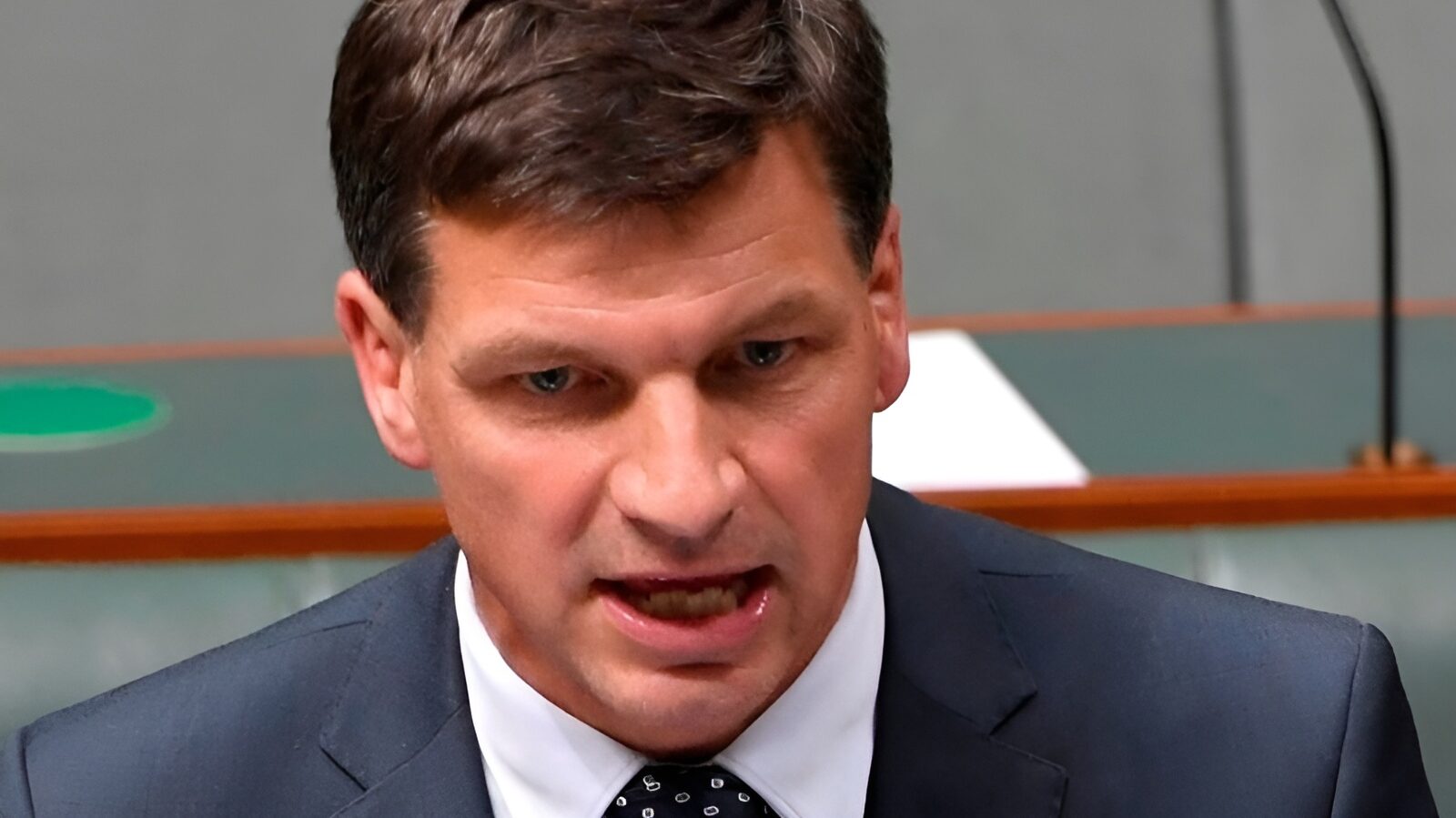
December 2018: Federal Energy Minister Angus Taylor sent an urgent letter to state counterparts
with a stark message:lives could be at risk from unsafe or substandard solar installations across
Australia.His warning wasn’t speculation. It was based on a national audit report that found up to one-quarter
of all rooftop solar installations inspected since 2011 posed a “severe or high risk.”
Speaking on 6PR, Minister Taylor didn’t mince words: “Up to 25% of the installations are faulty in
some form and some of them in a very serious way. It’s crucial that the states put in place the right
framework to make sure we deal with this issue appropriately and we avoid any kind of risk to
people’s lives.“
He even invoked the spectre of the pink batts fiasco – a government program that resulted in four
deaths and over 200 house fires.
The Numbers Behind the Warning
The Clean Energy Regulator’s audit revealed troubling patterns across 24,371 inspections:
Annual unsafe/substandard ratings: 21.7% to 25.7% of inspected installations each year (with brief
improvements in 2012-2013)
80% of “unsafe” installations were caused by water ingress in DC isolator enclosures on rooftops
“Unsafe” installations averaged 4.2% in early years, dropped to 1.9% in 2017, then climbed back to
2.7% in 2018
With over 2 million solar installations across Australia, even these “improved” percentages represent
hundreds of thousands of potentially dangerous systems.
What “Unsafe” Actually Means
The audit’s most consistent finding? Water ingress in DC isolator enclosures.
These rooftop-mounted electrical boxes are meant to isolate power from solar panels. But when
water gets inside, they become:
- Arcing hazards – Creating electrical sparks that can ignite fires
- Electrocution risks – Exposed live connections threatening anyone working nearby
- Fire triggers – Particularly dangerous during hot, sunny conditions when damaged systems
- heat up
The problem isn’t theoretical. DC isolators sitting exposed on Australian roofs for years, baking in the
sun, enduring storms and temperature extremes – they degrade. Seals fail. Water finds its way in.
Then the Hailstorms Hit
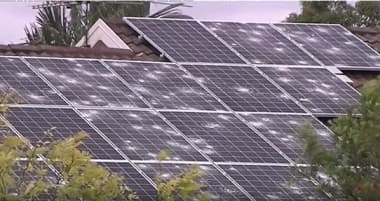
Just days after Minister Taylor’s warning, catastrophic hailstorms tore through Sydney in December 2018.
Emergency services faced unprecedented challenges:
- Damaged panels still generating potentially lethal DC electricity
- No practical way to isolate power at the source
- Standard operating procedures calling for 3-8 meter exclusion zones
- Thousands of damaged systems across NSW
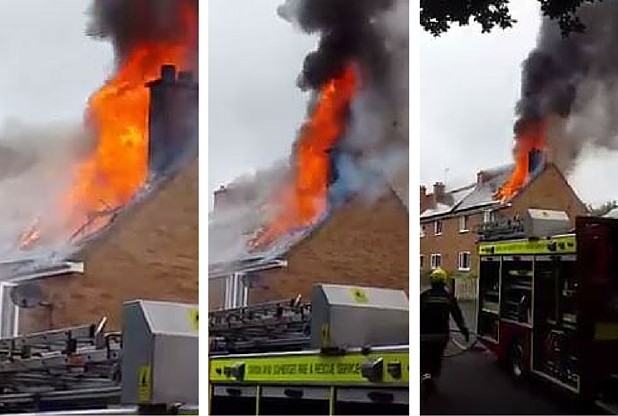
The Moorebank incident three days later proved the danger. A factory’s hail-damaged rooftop solar
system had power isolated after the storm. But when hot, sunny conditions returned, the damaged
panels began arcing. The result? A significant roof fire that threatened the entire facility.
The damaged panels were still trying to generate power – and that’s what made them dangerous.
The Industry’s Response
The Clean Energy Council defended the industry’s record, noting that unsafe installations had
declined from 4.2% to 2.7% – “better than the electrical industry as a whole.”
Clean Energy Council Chief Executive Kane Thornton emphasized that “a single part of a solar power
system that is not completely up to standard does not mean a system is unsafe.”
Fair points, but they miss the fundamental issue that the December 2018 hailstorms exposed: even
properly installed systems become dangerous when damaged, because the panels can’t be
switched off.
The Three Compounding Problems
Problem 1: Installation Quality – One-quarter of systems inspected had issues, primarily water ingress
in DC isolators creating fire and electrocution risks.
Problem 2: Aging Systems – Solar systems from the Feed-in Tariff boom (2010-2015) are now 10-15
years old. Components degrade. Seals fail. Inspection rates remain low.
Problem 3: Storm Damage – When hail, storms, or other events damage panels, they remain
energized. There’s no practical way to isolate power at the source – until now.
What Emergency Services Faced
After the December 2018 hailstorms, fire and emergency services had three options:
Option 1: Establish exclusion zones and wait
- Contradicts their mission to protect communities
- Allows damage to escalate
- Leaves dangerous systems energized indefinitely
Option 2: Use tarps to cover panels
- Dangerous practice requiring personnel to approach live equipment
- Tarps can slip, tear, or catch fire
- Doesn’t eliminate electrical hazards
Option 3: Do nothing
- Not acceptable for agencies charged with protecting the public
- Leaves property owners and communities at risk
None of these were good options. Fire services needed a fourth option.
The Solution That Didn’t Exist – Until PVSTOP
When Minister Taylor warned about unsafe installations and the hailstorms hit days later,
emergency services discovered a critical gap in their capabilities. Traditional methods couldn’t safely
address damaged, energized solar systems.
PVSTOP was developed specifically to fill this gap.
How PVStop works:
- Applied from up to 10 meters away – no approaching live equipment
- Blocks light from reaching PV cells, stopping power generation at the source
- Reduces DC current to zero within 7 seconds
- Remains protective for up to 12 months after application
- Peels off easily, allowing undamaged panels to return to service
What this means for the scenarios Minister Taylor warned about:
Water-damaged DC isolators? PVSTOP eliminates the power generation that makes them
dangerous, allowing safe inspection and repair.
Hail-damaged systems? Applied immediately after storms, PVSTOP prevents the secondary fires that
occurred at Moorebank and other locations.
Substandard installations? Systems can be de-energized at the source for safe remediation work.
Emergency response? Firefighters can eliminate electrical hazards in seconds, enabling direct
engagement rather than defensive tactics.
Beyond Emergency Response
PVSTOP’s applications extend to the everyday safety issues the audit highlighted:
- Maintenance and repairs – De-energize sections for safe work on installations with compliance
issues - System inspections – Allow thorough electrical safety assessments without waiting for nightfall
Storm preparation – Pre-position PVSTOP at facilities with large arrays for rapid deployment if
needed - Decommissioning – Safely de-energize aging systems identified as high-risk during inspections
Insurance compliance – Demonstrate proactive risk mitigation for commercial installations
What’s Changed Since 2018?
Minister Taylor’s warning and the December 2018 hailstorms were wake-up calls. Since then:
What’s improved:
- Greater awareness of solar safety issues
- Enhanced inspection protocols
- Better installer training and accountability
- Improved component standards
What hasn’t changed:
- Solar panels still can’t be switched off when exposed to light
- Hundreds of thousands of older systems remain uninspected
- Storm damage continues to create dangerous situations
- Emergency services still need source-level de-energization capability
The Questions Every Solar Owner Should Ask
For residential systems:
- When was your system last inspected by a qualified professional?
- Are your DC isolators showing signs of weather damage or corrosion?
- Is your installer still accredited by the Clean Energy Council?
- Does your insurance cover storm damage to solar components?
For commercial installations:
- Do you have a documented plan for responding to solar system damage?
- Are your local fire services aware of your solar arrays and their specifications?
- What’s your duty of care obligation to workers and emergency responders?
- How quickly could you de-energize damaged panels after a storm?
For emergency services:
- What equipment do you carry for solar-specific incidents?
- How do your SOGs address damaged but energized arrays?
- What training have crews received on solar hazards?
- Do you have source-level de-energization capability?
The Real Message Behind the Warning
When Minister Taylor warned that “25% of installations are faulty in some form,” he wasn’t just
criticizing installation standards. He was highlighting a systemic safety gap in how we deploy and
maintain solar technology.
The December 2018 hailstorms proved his concerns were well-founded. Thousands of damaged
systems. No practical way to make them safe. Emergency services forced into defensive positions.
Secondary fires days after the initial damage.
The solar industry had grown faster than the safety infrastructure needed to support it.
Making Australian Solar Safer
Australia leads the world in rooftop solar adoption – over 3 million installations and counting. This
success brings responsibility: ensuring that growth doesn’t compromise safety.
PVSTOP is part of that solution. By providing source-level de-energization capability, it addresses the
fundamental challenge that Minister Taylor’s warning and the 2018 hailstorms exposed: solar panels
don’t have an “off switch.”
Whether it’s a substandard installation needing remediation, a storm-damaged system requiring
isolation, or an emergency response to a solar fire, PVSTOP gives responders and solar professionals
the tool they’ve been missing.
Because Minister Taylor was right to warn us. And the industry needs to respond with more than
just better installation standards – it needs solutions that work when things go wrong.
Take Action on Solar Safety
Emergency Services: Request demonstrations and technical briefings for your brigade
Solar Industry Professionals: Access training on PVSTOP deployment for maintenance and
emergency scenarios
Facility Managers: Schedule risk assessments for commercial solar installations
Solar System Owners: Arrange inspections if your system is over 5 years old or shows signs of
weather damage