
A Maryland Fire Crew Just Made the Case for PVSTOP Better Than We Ever Could
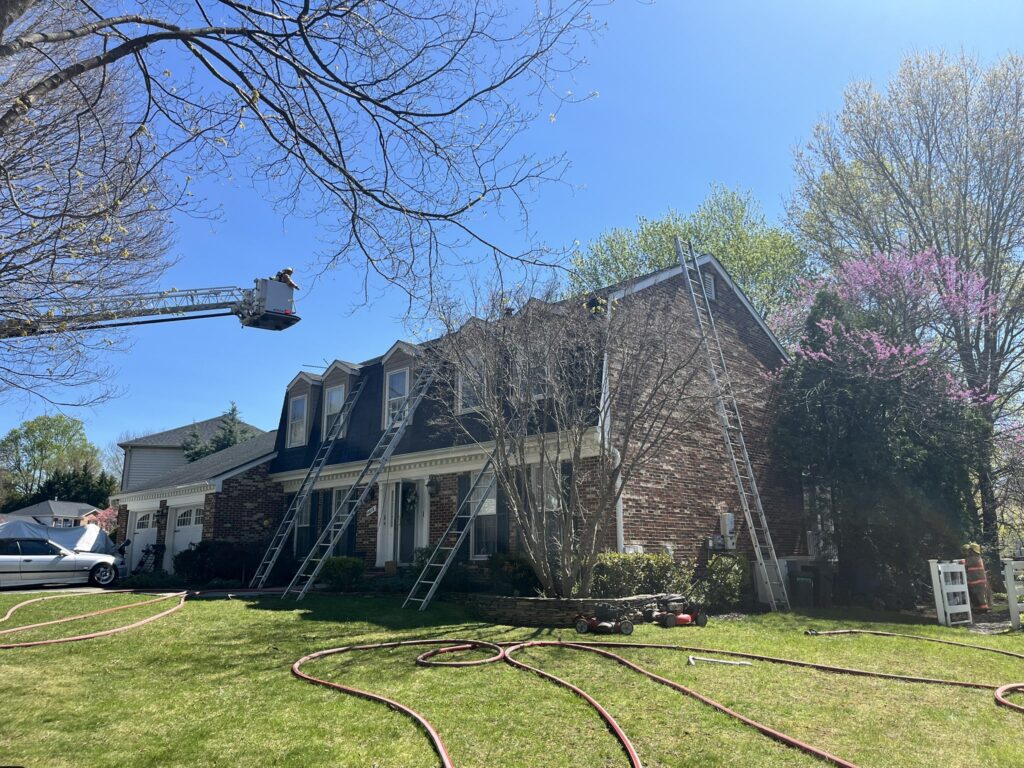
This week in Olney, Maryland, a family’s home caught fire. The blaze was on the roof, in the solar panels, and by the time Montgomery County Fire and Rescue Services arrived the array was burning and live.
Solar panels cannot be switched off while exposed to light. Rapid shutdown lowers voltage downstream. It does not stop the panels generating. That is the DC Danger Zone, and every firefighter on every solar roof is standing inside it.
So MCFRS did what good fire crews do. They put the fire out. Then they reached for PVSTOP.
Sprayed on. Light blocked. DC power gone at the source. Scene safe. Fire contained to the panels. No injuries. Family back in the house the same day.
That is the entire case for this product, written by a fire department that had never been on a PVSTOP marketing slide.
MCFRS didn’t wait for standards to catch up. Neither did London Fire Brigade, FDNY, the Singapore Civil Defence Force, ACT Fire and Rescue, or the ninety per cent of UK fire brigades that now carry PVSTOP. They looked at the DC Danger Zone, looked at what was available, and made the call.
The same physics apply on a fifty megawatt site. Commercial property owners, industrial facility managers, utility-scale solar operators and their insurers should be asking the question MCFRS already answered: when a rooftop PV system catches fire, what is actually going to make it safe?
Our thanks to MCFRS and PIO Pete Piringer for putting this into the public domain. The fire service has always moved this industry forward by sharing what works.