
When a Wiltshire Solar Farm Caught Fire, Firefighters Faced “Spectacular Voltages”
The Call That Changed Everything
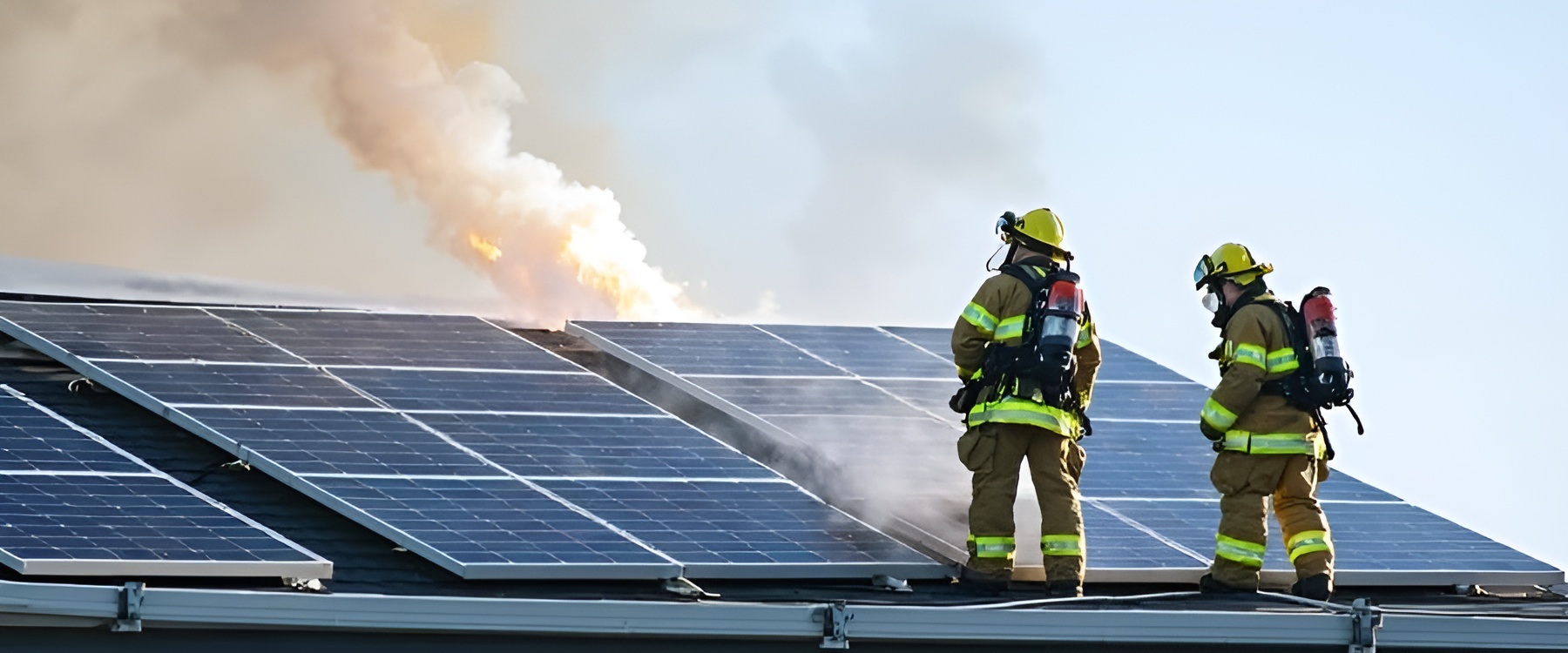
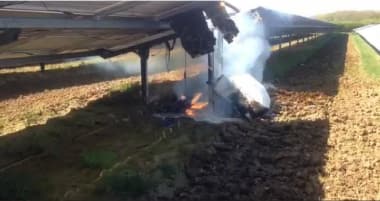
April 18, 2017, 2:30pm. A solar farm was on fire at Snarlton Farm on Sandridge Hill near Melksham, Wiltshire. Fire engines from Melksham, Trowbridge, Calne and Bradford On Avon raced to the scene.
Trowbridge Fire Station tweeted from the incident:
“Currently dealing with Solar Farm fire. As you can see the fire is being driven by some pretty spectacular voltages.”
That single statement reveals the fundamental challenge: solar panels cannot be switched off. Every beam of daylight hitting those panels meant more power feeding the fire, more voltage threatening responders, and more risk for crews trying to contain it.
The Equipment Gap
In 2017, firefighters had few good options. CO₂ extinguishers offered only limited control on large arrays. Water, though effective in many fires, carried a serious electrocution risk when used near live panels. Defensive perimeters were often the safest choice, allowing fires to burn themselves out while crews protected nearby structures and waited for darkness.
Traditional firefighting tools were never designed for energised solar systems. The result was a series of impossible choices between saving assets and staying alive.
The Cost of Solar Fires
The Sandridge Hill fire highlighted just how costly these incidents can be. The immediate losses were clear – damaged infrastructure worth hundreds of thousands of pounds, extended downtime and lost revenue, and expensive emergency responses. But the longer-term consequences were equally serious.
Fires at renewable energy sites often trigger insurance complications, regulatory investigations, and rising premiums. The environmental impact can also be significant, with toxic smoke, contaminated runoff, and the disposal of damaged modules. Perhaps most damaging of all is the blow to public confidence in clean energy infrastructure.
How PVSTOP Changes the Outcome
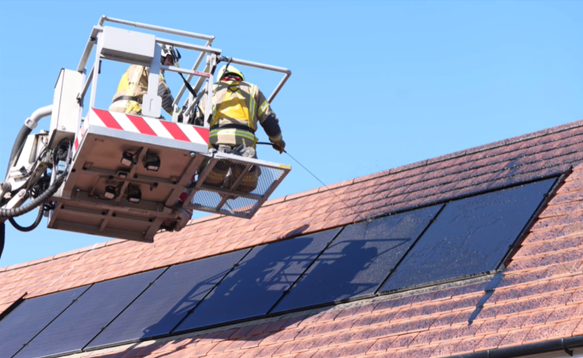
If Trowbridge Fire Station had access to PVSTOP that afternoon, the response could have looked very different. Within seconds of application, PVSTOP would have coated the panels, blocking sunlight and de-energising them at the source. Those “spectacular voltages” would have dropped to zero, removing the threat of electrocution and allowing crews to work directly on the fire instead of defending from afar.
By isolating the energy at its source, PVSTOP transforms how solar fires are managed. Instead of watching valuable assets burn, firefighters can take immediate, targeted action. The result is faster containment, reduced damage, and fewer environmental risks. Once the site is secure, the protective coating can remain in place for up to a year, giving assessors time to inspect and safely restore undamaged panels to service.
From Firefighting to Fire Prevention
Today, leading fire services around the world – including the London Fire Brigade, FDNY, and emergency agencies across Australia – have made PVSTOP standard equipment. The reason is simple. It allows instant de-energisation, delivered safely from a distance, while its fire-retardant formula prevents the spread of flames and encapsulates toxic materials released by damaged panels.
PVSTOP has also become an essential tool beyond emergency response. Solar operators and maintenance crews use it to de-energise sections of an array during repairs, isolate storm-damaged panels, or safely decommission systems. It has become a recognised mitigation measure for insurers and regulators alike.
The Growing Risks
Since the Wiltshire incident, the UK’s installed solar capacity has grown dramatically. Many of the systems built under the Feed-in Tariff era (2010–2019) are now ageing, with higher voltages and increased maintenance requirements. With that growth comes greater potential for electrical faults, arcing, and fire.
The question is not whether another solar farm fire will occur – it is whether fire services and operators will be ready when it does.
Closing the Safety Gap
When firefighters in Trowbridge described those “spectacular voltages” in 2017, they unknowingly pinpointed a global safety challenge. Modern renewable energy systems demand modern protection strategies.
PVSTOP bridges the gap between clean energy and safety, giving firefighters and solar professionals the power to de-energise systems instantly and safely. It protects people, property, and the long-term reputation of solar energy.
The Sandridge Hill fire showed what happens when responders face live solar systems without the right tools. The next one doesn’t have to.